Robert E. Segert
Class of 2026
- Chairman and Chief Executive Officer athenahealth
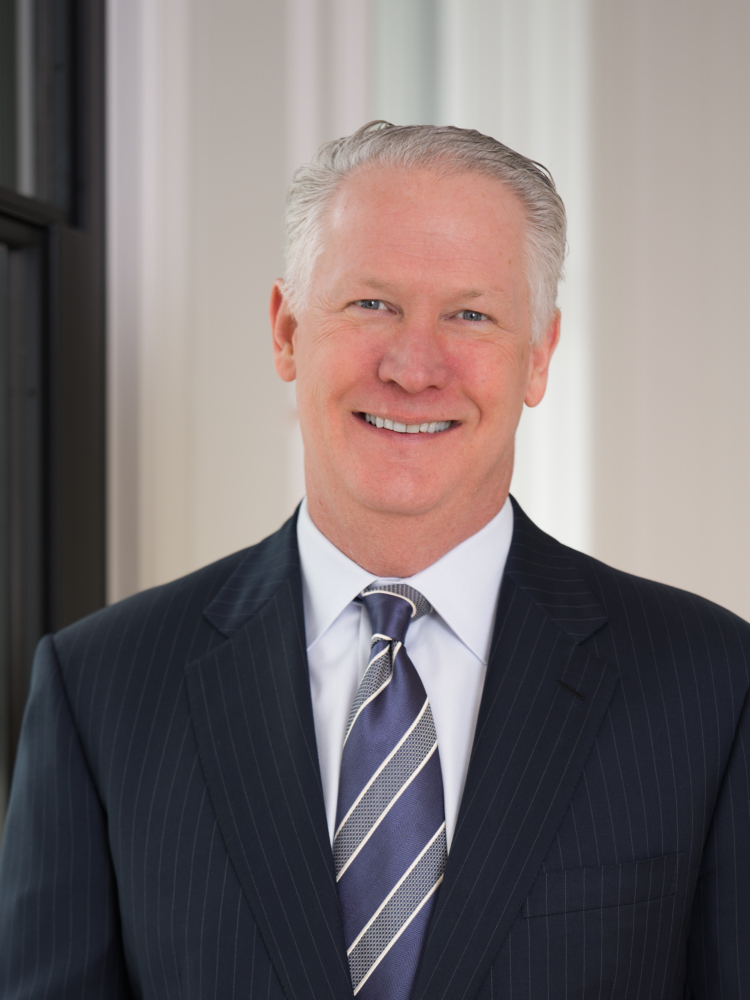
You need preparation to meet opportunity, and that’s when luck happens.
The youngest of three, Bob Segert was born in 1968 in the small Indiana town of Crown Point, outside Chicago. When Segert was born, his father worked at the local gas station, eventually buying his way to full ownership through grit and determination, setting a strong example of what is possible through hard work. Segert began working at the station when he was 13. He pumped gas, washed windows, changed tires, checked oil, mowed the grass around the station—whatever his father assigned him. “One thing I learned working for my father,” Segert says, “is that no job is beneath me. If you want to lead and contribute, you don’t just do things that are easy. You do things that are hard and you put yourself forward. I also learned the importance of customer service.”
Segert’s mother worked as an administrative assistant for a small insurance company. “My mother was the cornerstone of our family,” Segert says. “She was our taskmaster and disciplinarian. She gave me strong values and taught me to be a servant to others. She was always thinking about how she could help our community. Her teachings show up in the way I present myself, and I’m grateful to her for that. It has served me well.”
The Segert family had little in material goods. His parents never bought a new car or piece of furniture. “My parents were frugal, but we had everything we needed. I think love is all you really need.”
Segert’s parents did not attend college, but education was a high priority in their family. Both of his older siblings attended college, and Segert knew that he would do the same. His grades in high school were strong. He did particularly well in math and science. As a result, his guidance counselor suggested he become an engineer. As salutatorian of his class, he applied to and was accepted at Purdue University.
He loved campus life, but struggled with his major. He thought about biomedical engineering, but abandoned the idea when he learned he would have to go to medical school. Next, he tried chemical engineering, but his low grade in chemistry was not encouraging. He finally settled on mechanical engineering, which turned out to be a good fit.
Segert earned his bachelor’s degree with honors in 1990. His summer internship at Frito-Lay turned into a position as a corporate engineer for the company in Plano, Texas. Two years later, he decided that if he wanted to move up the corporate ladder, he needed to pursue higher education. He accomplished that, receiving his MBA from Harvard in 1994. “That experience,” he says, “is what catapulted my business career and prepared me for a future I could not even imagine. I believe you need preparation to meet opportunity, and that’s when luck happens.”
While working at Frito-Lay as a packaging engineer, Segert’s first assignment was to find a way to expand packaging capacity in their plants. He was given six weeks to come up with a solution. Three days later, he successfully completed the assignment, which opened the door for him to be assigned to some of the most critical programs at the company.
“I think it was my initiative and effort that really catapulted me forward and gave me more important assignments thereafter,” Segert says. “A lot of my positive work habits come from my father. He worked seven days a week at the gas station, but he was also a city councilman for 18 years and was head of the local planning commission. He was a Mason and head of the Lion’s Club. He raised money for our first city pool. When he passed away, the town declared a Vern Segert week in recognition of all the things he had done for our community. He was a hard worker and constantly gave of himself. I saw those as positive attributes.”
After his case-study MBA education at Harvard, Segert knew he wanted to go in a different direction with his career. “I didn’t yet know I wanted to be a CEO, but I knew I wanted a seat at the table with the executives.”
From 1994 to 1998, Segert worked for A.T. Kearney, a consulting firm in Dallas. While there, he did strategic consulting for Shell Oil, Prudential Healthcare, and Sears. When Kearney was acquired by Electronic Data Systems Corporation (EDS), he was asked to transition to the parent company to lead strategic planning worldwide. This position made him a vice president at the age of 29. “I was head of corporate strategy and development and a member of the senior staff, which was very exciting and rewarding, but looking back on it, I can see I was not ready for that job.”
Segert methodically learned his job, which soon led to running the U.S. financial services business for EDS, which led to being named the chief marketing officer, which led to running the company’s global financial services business. These opportunities over a 10-year period brought him to his first CEO position.
In 2008, Segert became CEO of GXS Worldwide, a private equity-backed company. He spent the next six years turning that company around. After GXS was sold in 2014, he became president and CEO of Expert Global Solutions, a 40,000-employee global call center business. He transformed the company in two years and sold it. Shortly after, he took on the chairman role at Aspect Software and eventually stepped in as executive chairman, supporting the business in its eventual sale to private equity.
Bob Segert’s career since 2018 has been defined by leading major transformations in healthcare technology. In 2018, he was appointed chairman and CEO of Veritas Capital’s newly acquired value-based care business, later branded Virence Health. In early 2019, Segert partnered with Veritas to take athenahealth private, merging it with Virence. Segert was chosen to lead the combined company, becoming chairman and CEO of athenahealth, a role he continues to hold.
Under his leadership, athenahealth has expanded its cloudbased healthcare platform, strengthened financial performance, and navigated a second major ownership change when the company was sold to Bain Capital and Hellman & Friedman in 2022. Throughout this period, Segert has become a prominent figure in health IT, known for steering large-scale transformations and driving growth across the athenahealth network.
Segert started out as an engineer, but ended up a long way from that position. Still, he credits much of his business success to what he learned as an engineer. “Basically, engineering is solving a problem,” he says. “It’s looking at what the outcome needs to be and then breaking down the solution into small, incremental steps. What I’ve done with several companies over the years is to build a set of operating mechanisms that have proven to be repeatable and quite valuable. We build a culture around a clear strategy—incorporating strong values and behaviors—and then adopt a disciplined execution against the plan.”
Segert is a believer in the American Dream. “This amazing country and its pioneering spirit set the foundation for innovation, economic growth, and prosperity. Our people have a drive to achieve, and for me, that begins with education. The value of education is that it teaches you to think. It sets the table for the process of exploration and pushes you to try different pathways until you find the one that works for you.”
Humbled by his Horatio Alger Award, Segert says he believes strongly in the mission of the Association. “I’m very impressed with the Scholars. I think about myself at their age, and there is no way I could have carried myself in that way. Their questions and curiosity reveal their drive and enthusiasm for their future. I very much want to be a part of that. The Horatio Alger Members are a resource for these young people. I see it as a family, and that touches me deeply.”
Looking back over his career and how he approached each new position, Segert offers this advice to the Horatio Alger Scholars: “Circumstances are oftentimes out of your control, but the way you respond to them—your attitude and your work ethic and the way you treat other people—is all in your control. The right attitude and having a service mentality are 90 percent of what you need to succeed. When things get tough, don’t worry about the things you can’t control. Focus on what you can do to achieve a better outcome. A positive attitude will bring blessings to your life and make a real impact in the world.”