Byron Roth
Class of 2026
- Executive Chairman Roth Capital Partners
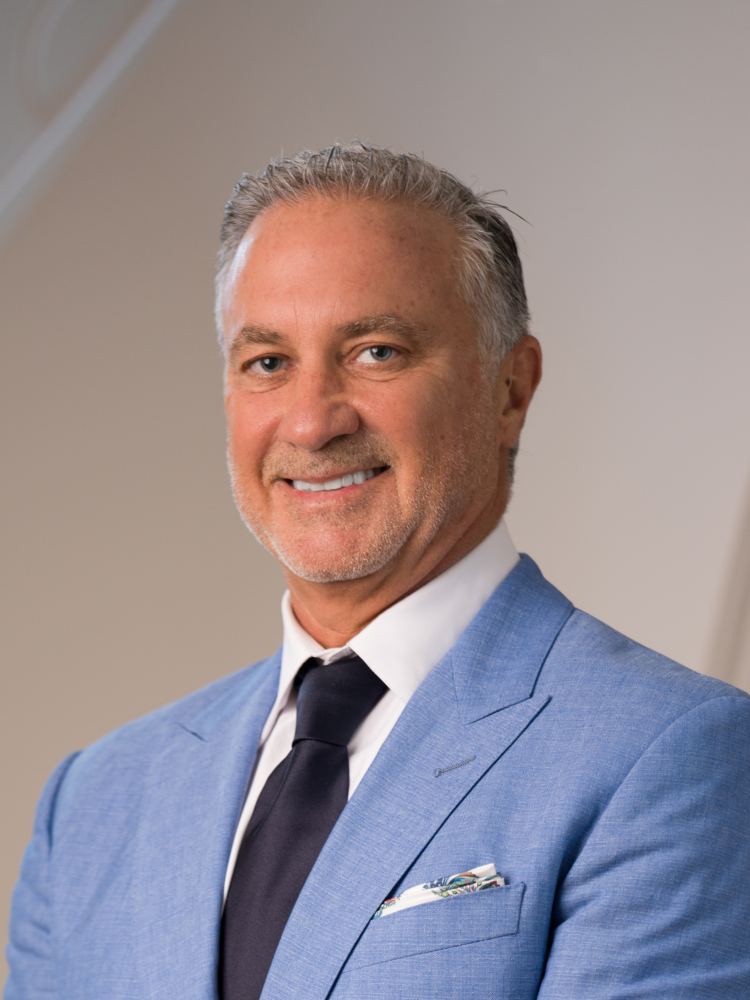
The Horatio Alger Scholars will pursue their entrepreneurial dreams, and that strikes a chord in me.
Byron Roth was born in 1962 in a tight-knit Mennonite community in Wayland, Iowa. “My world consisted of farmland, six Mennonite churches, and a town so small the nearest stoplight was 10 miles away,” Roth says.
During his toddler years, Roth’s father was a farmer. His older brothers also worked on the farm with their father, and that would have been Roth’s future if not for a series of tragedies that changed life for everyone in the family. “My dad lost his father and brother in farming accidents, and then we lost our farm when turkey prices collapsed. Everything was liquidated and my parents were forced to start over.”
The family moved into town and Roth’s father became a livestock feed salesman. “He discovered a talent for sales and eventually that led him to owning two livestock auction barns,” Roth says. “I learned a lot from my father. He never feared failure. He relied on his own intellect and worked hard and moved forward. He liked people and they liked him back. To this day, when I return to my hometown, people say to me, ‘Everybody loved Max.’”
Roth’s mother also had to make some major changes. At the age of 45, she returned to school and earned a degree as a physician assistant. Unfortunately, she couldn’t find a job after her graduation. Instead, she went to work for the local veterinarian, staying in that position for 26 years. “My mother worked from the time I was in school. Whenever she couldn’t get a babysitter for me, I went on rounds with the vet. I loved livestock animals. I joined 4-H— mostly so that I could play on their basketball team, but I grew to enjoy the organization and stayed with it throughout high school.”
Roth has four brothers—three older and one younger—and they have all had an influence on him. His older brothers were in high school when their father lost the farm, which meant they too had to pivot from previous expectations of working on the land. Football became an unexpected path forward. Roth says, “My brothers were good football players and they were offered college scholarships for their athletic talents. I planned to follow in their footsteps, and set my sights on the University of Iowa.”
When one of his brothers was scheduled to play in a bowl game, Roth and his parents took their first airplane trip to California for the event. “As soon as we landed, I loved California. I began to think that if I couldn’t play for a big football program, then maybe I could get a scholarship to a small California school.”
He toured the University of San Diego (USD) and immediately felt it was the right place for him. Unfortunately, they did not offer football scholarships. Instead, Roth applied for and received an academic scholarship along with a work study program.
USD is a Catholic school and Roth’s parents were unsure about that. Roth proposed that a Mennonite pastor give his blessing on the decision. “Thankfully, I received the pastor’s support and I was off to a whole new world in Southern California,” Roth says.
As a freshman, Roth had no idea what he would do for a career after graduation. During his senior year, he took an elective course—a finance class on capital markets. The course included a simulated stock market game and Roth suddenly knew what he wanted to do. “I loved the competitiveness, action, and teamwork of this game. It reminded me of what I love about football. I knew my place was on Wall Street. The only problem was my undergraduate degree from USD wasn’t going to get me there.”
Deciding he needed an MBA from a Wall Street feeder school, Roth applied to Cornell’s Johnson School of Business. After receiving a deferred acceptance, Roth requested an interview to show his determination. He shared his life story with the dean, a former executive with John Deere and well-versed in the Mennonite farming community. Immediately after the interview, Roth was offered admission.
Roth got an internship with Marshall Swartwood, a Cornell alum, who had a family office on Wall Street. His biggest claim to fame was having both Henry Kravis, who later went on to found Kohlberg Kravis Roberts (KKR), and Teddy Forstmann of Forstmann Little work for him early in their careers. Following his MBA achievement in 1987, Roth began working full time for the Swartwood family office and he became Roth’s mentor.
After five years on Wall Street, Roth returned to Southern California, where he joined a small investment banking firm, Cruttenden & Company. He quickly became the firm’s top producer and advanced to president and partner, which resulted in the renaming of the firm Cruttenden Roth. Five years later, he became CEO, chairman, and the majority shareholder. In 2000, the firm became Roth Capital Partners, which is headquartered in Newport Beach, California, and has 225 employees throughout the country.
Under his leadership, the firm has raised more than $100 billion in capital and advised on numerous mergers and acquisitions across diverse industries. Additionally, Roth has co-founded three private investment firms: RX3 Ventures LP, RIVI Capital LLC, and Aceras Life Sciences LLC. He also co-founded two asset management firms Cortina and EAM, and has served as co-chair and co-CEO of five special purpose acquisition companies.
“Entrepreneurship has always been a driving force in my career,” Roth says. “I formed a holding company to create strategic businesses that could benefit from the Roth Capital experience, relationships, and platform.”
Looking back over his career, Roth is deeply grateful for the opportunities education has given him. He has made it a priority to support academic institutions in every stage of his journey. He served nine years as a trustee at his alma mater, USD, and is a founding member of the school’s Athletic Council. He also served for 10 years on the Advisory Board of the Johnson School at Cornell and was recently honored with emeritus status.
Roth has long been involved with the Boys and Girls Clubs of America (BGCA) and serves as a member of the national board of governors. One part of his relationship with the organization is the creation of a partnership between BGCA and Special Olympics to provide club access to Special Olympic participants. This program promotes inclusion by bringing together youth with and without intellectual disabilities to build acceptance, leadership, and healthy lifestyles. “This mission resonates deeply with me,” says Roth, whose younger brother Courtney has Down syndrome and is a Special Olympic athlete. “Courtney has been a lifelong inspiration to me,” he says. “His example reminds me daily of the importance of compassion, inclusion, community, and just being happy.”
“My life lessons began with my parents,” Roth says. “They gave me a firm grounding through faith and values that I have passed on to my children. My parents taught me to create a new pathway when your current path forward crumbles beneath you. They also taught me to not fear failure. These were valuable lessons that have served me well.”
Relationships, both personal and business, have greatly affected Byron Roth’s life. “My parents believed in me and that allowed me to believe in myself. I think that is key when pursuing your dreams and goals. You have to have that inner strength in yourself and your abilities. If you can do that, anything is possible. The American Dream is there for all of us, but it doesn’t come to you; you have to go out and get it.”
Honored by his Horatio Alger Award, Roth says he finds the mission of the Association to be impactful and inspiring. “I have attended the Awards events before and being surrounded by impressive and accomplished individuals who have overcome adversity reinforced my belief in the power of perseverance and giving back. The Horatio Alger Scholars, with the help of their scholarship, will pursue their entrepreneurial dreams, and that strikes a chord in me. I was that kid who was able to reach my goals, but it wouldn’t have been possible without the education I received, which opened the doors of opportunity.”